Smørum Kirke · Zealand, Denmark
Smørum Church
Nearly 900 years of history
A medieval church, an ancient village, and a story intertwined with the rise of Copenhagen. Discover the people, paintings and legends behind this special corner of Denmark.
The complete historical study · English edition · 23 October 2026
A note from Jesper
Why we chose Smørum Church
Smørum Church has been part of my family’s life for the past fifty years. I was confirmed here — the Danish konfirmation — and both of my children were baptised here. Both of my grandparents are buried in the churchyard, as is my mother.
Now it will also be the church where we are married. For me, choosing Smørum means beginning this new chapter in a place that has been central to my family’s life for generations.
Jesper
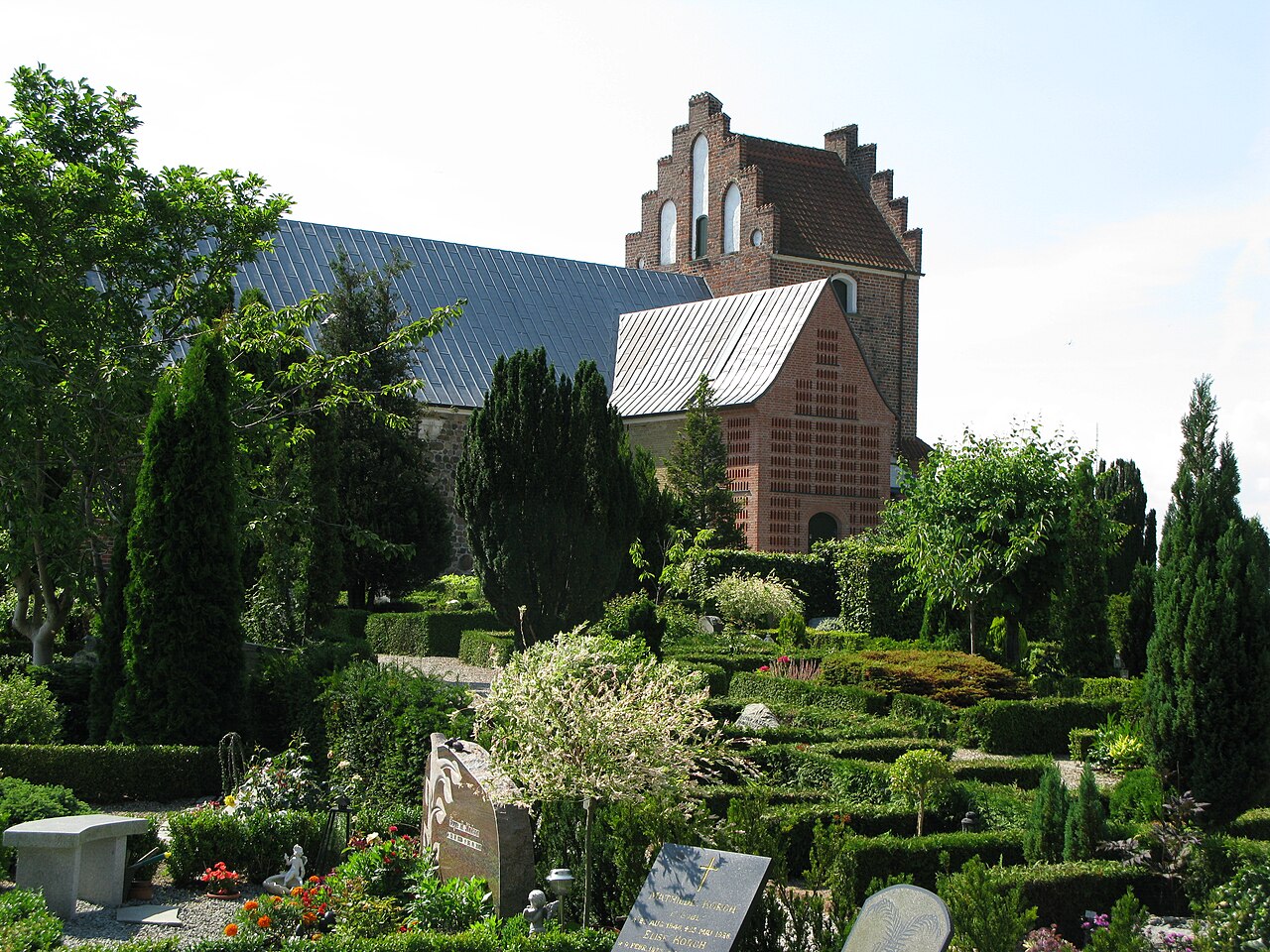
Explore the story 12 chapters & sources
1. A church from the era of Copenhagen’s emergence
Smørum Church is a remarkable historical witness to the period in which Denmark developed from a kingdom shaped by Viking Age traditions into an organised medieval society with strong ecclesiastical institutions, royal authority, and growing trading towns.
The church is traditionally dated to around the year 1170, just three years after 1167, the date traditionally associated with the founding of Copenhagen.
An important historical distinction is needed, however: Copenhagen was not created out of nothing in 1167. Archaeological investigations have established that settlement and trading activity already existed before 1100 around the natural harbour known as Hafn.
The year 1167 is particularly associated with Bishop Absalon’s construction of a castle on what later became Slotsholmen. It was a decisive event in the city’s development, but not the beginning of all settlement there.
This makes the parallel with Smørum particularly interesting:
At roughly the same time as Absalon fortified the trading settlement of Havn on the Øresund, builders were erecting the stone church at Smørum, parts of whose original masonry still survive in the church today.
While Copenhagen subsequently developed into a capital city, Smørum remained an agricultural district of villages and manorial estates, linked to the same ecclesiastical and aristocratic power structures that shaped medieval Zealand.
The original church should therefore be seen as more than an old place of worship. It is a surviving fragment of the society that existed when the urban and ecclesiastical structures of modern Denmark were beginning to take shape.
An essential point of source criticism is that 1170 is an approximate architectural-historical date, not a documented year of consecration. We do not know who laid the foundation stone or the exact date on which the church was consecrated. Both the church’s own historical account and local historical research use the date of around 1170.
2. Smørum was an established community before the church was built
The earliest written evidence for Smørum: 21 May 1085
The earliest securely documented written reference to Smørum dates from almost a century before the present church was built.
On 21 May 1085, King Canute the Holy issued a deed of gift to St Lawrence’s Church in Lund, which later became Lund Cathedral. Among the king’s gifts were two bol of land in Smørumnedre, then called Smørhem minor.
A bol was a medieval unit used to assess landholdings and taxation. The gift shows that by 1085 the area was already part of an organised system of property ownership and dues, within which the crown could transfer land and revenues to ecclesiastical institutions.
The deed is regarded as the oldest surviving coherent text of Danish origin, although the original document was destroyed in a fire in 1697. Its wording is known from copies.
It is important to distinguish between two historical facts: Smørumnedre is documented in 1085, but this does not prove that Smørum Church already existed. The deed concerns landed property, not the present church building.
Instead, the deed offers a different, equally interesting insight: a picture of an agricultural community on Zealand that was already important enough to figure in a royal transfer of land.
Smørumovre, Smørumnedre, and Smørum Hundred
Historically, Smørum comprised two separate villages, Smørumovre and Smørumnedre. Medieval sources record names such as Smørhem major and Smørhem minor - the larger and smaller Smørum.
The place-name ending -hem is related to an old word meaning home or dwelling. The first element, Smor-, has received different explanations. One linguistic interpretation associates it with fertile land, while stories about butter being offered as a sacrifice are less securely grounded.
Smørum also gave its name to Smørum Hundred (Smørum Herred), an administrative and judicial district substantially larger than the village itself. A herred, or hundred, had functions involving the courts, tax collection, and local organisation.
The National Museum of Denmark’s architectural account suggests that the church probably had the character of a hundred church because the district bore the parish’s name. This is a historical inference, not a directly documented designation. Nevertheless, it suggests that Smørum may have occupied a prominent position within the older regional structure.
Why is the church outside the village centre?
Smørum Church stands on a small rise at the southeastern edge of Smørumovre, visibly separated from the old village buildings.
Both Smørum villages once had farms and houses clustered around village ponds. According to Trap Danmark, Smørumovre had 15 farms as well as an inn, a smithy, and other small businesses, while Smørumnedre had 13 farms. The villages were approximately one and a half kilometres apart.
The church’s somewhat isolated location raises questions about the choice of the original site, but no definitive architectural-historical explanation is known. This is precisely why the location inspired one of the area’s old legends, discussed below.
3. Absalon, the Hvide family, and church building on Zealand
The years around 1170 were a distinctive period in Danish history. King Valdemar the Great and Bishop Absalon were leading figures in the consolidation of royal power and the expansion of the church’s position.
On Zealand, the powerful Hvide family was deeply involved in royal politics, landownership, defensive construction, and ecclesiastical building projects.
This matters particularly for Smørum because the Hvide family owned land in this part of Zealand. Relatives of Absalon held estates in Ledøje and Smørum, among other places, and the unusual medieval church at Ledøje is associated with the magnate and bishop Jakob Sunesen.
On this basis, local historian Georg Strong has raised the question of whether Smørum Church might also have been built on the initiative of a member of the Hvide family. He explicitly stresses, however, that there is no documentary evidence of such a connection. It therefore remains a historical possibility, not an established fact.
Another link with this aristocratic world can be found at Smørholm Castle Mound (Smørholm Voldsted), in the area around the later Edelgave estate. A fortified medieval manor stood here and was once held by the Hvide family. In the early fourteenth century, the site was associated with Cæcilie Jonsdatter, who died in 1307.
Smørum should not, then, be imagined as an isolated farming community far removed from events around the new trading town of Havn. The area belonged to a landscape in which Zealand’s leading nobles and ecclesiastical authorities had significant interests.
The historical parallel is striking: The generation that saw Absalon strengthen Havn also witnessed the construction of stone churches in villages such as Smørum. Both developments reflected a more permanent organisation of power, property, religion, and local communities.
No evidence has been found, however, that Absalon personally founded, financed, or consecrated Smørum Church.
4. The architectural history of the church: from Romanesque village church to the present building
The church visible today is not a single building dating entirely from 1170. It is the result of some 850 years of alterations, repairs, and changing architectural ideals.
Around 1170: the Romanesque church
The first stone church comprised a rectangular nave and a narrower chancel to the east. It was constructed from rough and split fieldstones, while the corners used more carefully dressed materials, including limestone from Faxe and sandstone from Scania.
The nave’s long walls and western gable are among the principal surviving elements of this first construction phase.
One original round-arched window can still be identified above the southern entrance, where it now appears as a blocked opening visible from inside. This detail provides a direct glimpse of the building before its windows were enlarged and the church assumed its present form.
The early Romanesque church was much simpler in appearance than it is today: small openings for light, heavy stone walls, and probably a flat timber ceiling above the nave.
1300-1350: Gothic vaults are added
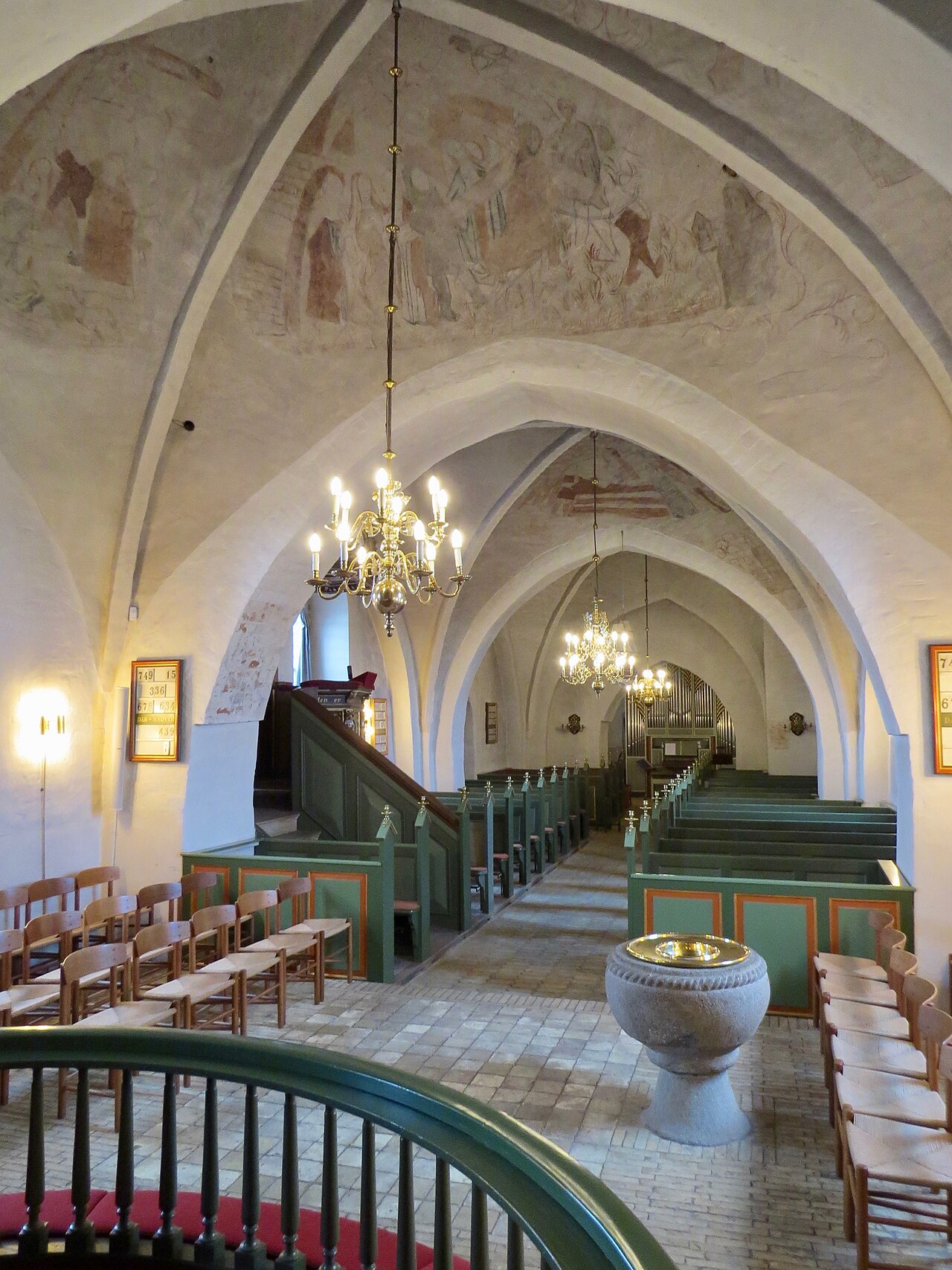
During the first half of the fourteenth century, ribbed cross-vaults were installed over the nave.
The change was significant both practically and architecturally. The vaults gave the interior an entirely different spatial character from the original wooden ceiling and later provided surfaces for the medieval wall paintings.
This is a clear example of how Smørum Church followed developments in Danish medieval architecture: the Romanesque building was gradually reshaped according to Gothic building practice.
The fourteenth century: construction of the tower
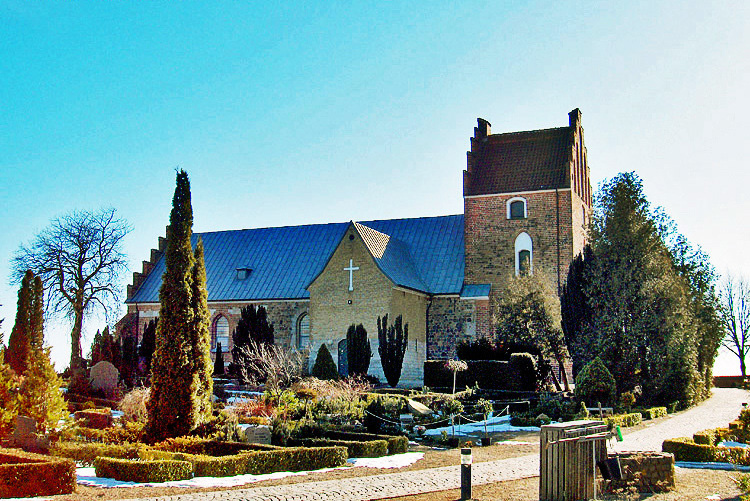
After the vaults had been installed, the western tower was built of large medieval bricks. It retains its distinctive stepped gables and relatively modest height.
The church’s own historical summary gives 1396 as the year of the tower’s construction. The National Museum’s more detailed architectural analysis dates the tower more broadly to the period after the vaults were built, probably still within the fourteenth century.
By contrast, 1396 is securely documented as the date inscribed on the oldest church bell.
It is therefore most precise to say that the tower probably dates from the fourteenth century, while the bell is definitely dated 1396.
Around 1500: a new and larger chancel
In the late Middle Ages, the original Romanesque chancel was demolished and replaced by the present extended chancel, which forms part of a longhouse-style church.
The chancel was built of red medieval bricks, but the builders reused stone from the earlier church. Horizontal bands of lighter dressed limestone can consequently still be seen in the newer masonry.
This transition between grey fieldstones in the nave and red brickwork in the chancel makes it possible to read the church’s history directly from its exterior.
It was also during this late Gothic period, around 1500-1520, that much of the church’s distinctive painted decoration was created.
1636 and 1650: roof repairs and defences against lead thieves
The year 1636 appears in iron anchors on the church’s eastern gable.
It is tempting to regard it as the date of the eastern extension, but the National Museum’s investigation shows that the extension is older. The inscription probably relates instead to a new roof structure or major repairs.
Another striking event took place in 1650. Both entrance porches were raised in height because theft of lead from the church roof had become a recurring problem. The old church accounts therefore show that the stealing of valuable building materials is by no means a modern phenomenon.
Around 1891: the major restoration
Architect J. D. Herholdt was responsible for an extensive restoration around 1891.
This intervention had a decisive impact on the church’s present exterior appearance.
Older windows with Gothic tracery were replaced with larger pointed-arch windows. Several massive buttresses were removed, and new ones were constructed at the eastern corners. The walls were stripped of their surface coating to reveal the underlying stonework.
One particularly interesting detail is that large areas of the church had previously been limewashed red. Today’s exposed fieldstone and brick facades therefore do not necessarily resemble what worshippers saw in earlier centuries.
Herholdt’s restoration reflected the nineteenth century’s interest in medieval architecture, but at the same time it altered and reinterpreted the building.
The twentieth century and the new millennium
Several documented changes followed the major restoration.
In 1972, a substantial interior renovation was carried out after a lengthy planning process under architect Knud Klinte. The National Museum opposed aspects of the proposed interventions, including more extensive replacement of the pews. The church reopened in December that year.
In 1989, a new organ made by P. G. Andersen’s organ-building firm was inaugurated.
In 1993, the roof required renovation, partly due to decay. Existing lead was reused and, according to the local historical account, the new lead roofing was cast in the churchyard itself using traditional methods. This was a noteworthy continuation of an old craft.
In 2008-2009, the northern porch was extended to accommodate baptismal facilities, following designs by Exners Tegnestue. Modern glass and red bricks, including a perforated brick pattern, were incorporated alongside the medieval building.
Finally, the altar, pulpit, and pews were among the furnishings restored in 2019.
The result is a building in which a Romanesque stone church, Gothic brick architecture, Renaissance furnishings, nineteenth-century restoration ideals, and modern ecclesiastical architecture all meet.

5. The medieval wall paintings: perhaps the church’s greatest art-historical treasure
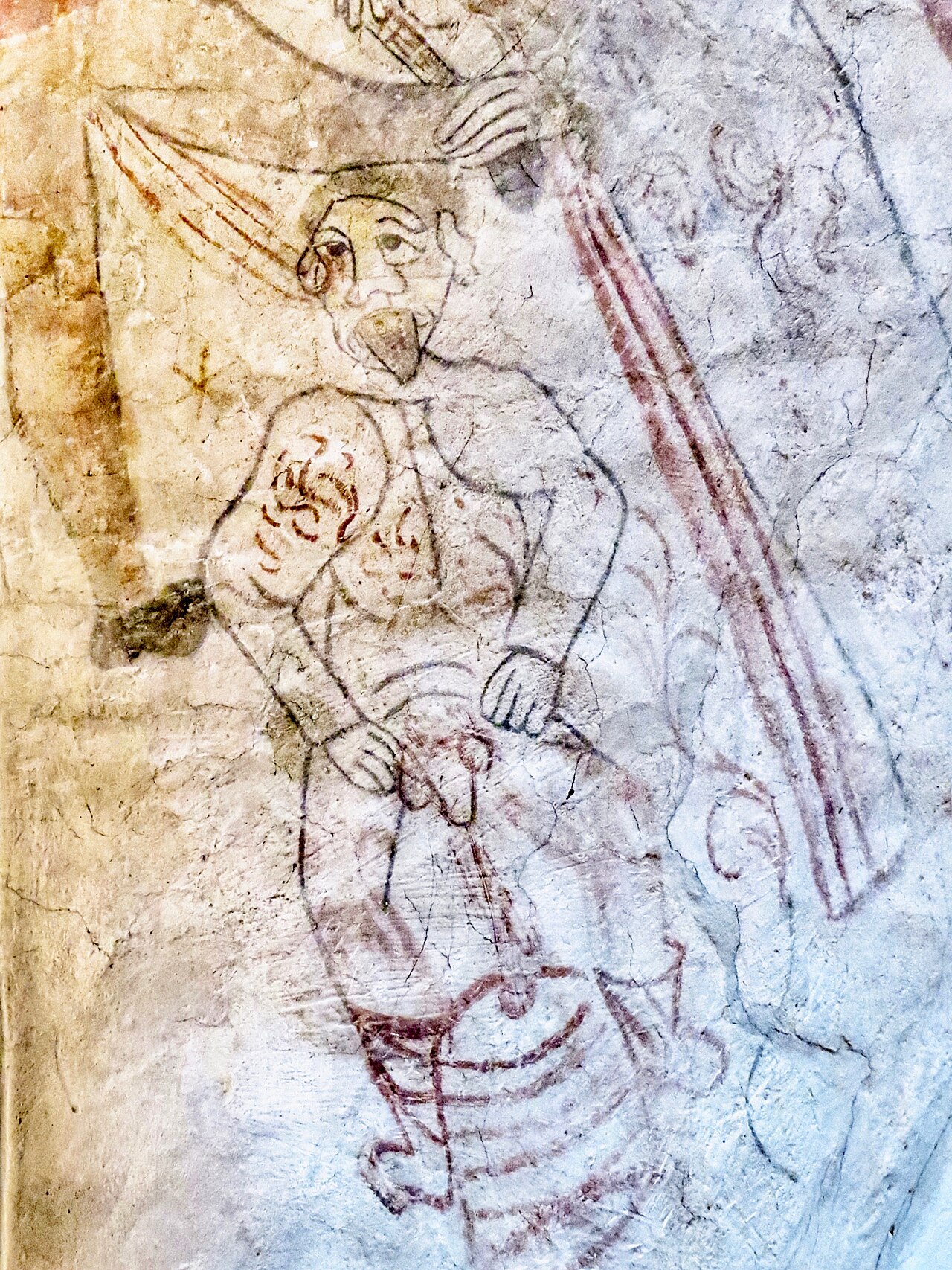
The medieval wall paintings at Smørum Church are unusual both in their subject matter and in the history of their preservation. Specialists at the National Museum date most of them to approximately 1500-1520.
They depict, among other scenes, the Passion of Christ, the Last Judgement, the prayer in the Garden of Gethsemane, the Kiss of Judas, and the Crucifixion.
Yet the decoration contains much more than traditional biblical narratives.
There are also fabulous creatures, devils, fools, entertainers, and scenes from ordinary human life. Among the more surprising images mentioned by a National Museum conservator are a woman whipping a man, a man urinating into a barrel, and a glutton.
These paintings remind us that medieval church imagery was not exclusively solemn or devotional. It could also be humorous, moralising, and earthy. The images may have served as warnings against sin, comments on human behaviour, or elements of the period’s visual storytelling.
An unusual discovery: the Apostles and the Creed
A particularly important part of the decoration consists of the so-called consecration crosses, or dedication crosses, which appear together with the crucified Christ and figures of apostles carrying scrolls.
The motifs are connected to the consecration of the church and to individual clauses of the Christian Creed. They have special art-historical significance because they may help researchers understand how consecration crosses were used in Danish medieval churches.
The National Museum has highlighted this rare combination of images as one of the church’s most important discoveries.
The remarkable restoration history: from rejection to preservation
The history of how these paintings were treated is almost as interesting as the paintings themselves.
In 1891, medieval wall paintings were discovered during work on the church. Conservator Magnus Petersen considered their artistic quality so poor that, in his view, further examination was not justified. They were therefore covered again with limewash.
In 1954, paintings were uncovered once more, and in 1963, conservator Olaf Hellvik carried out a restoration.
In 1972, conservator Robert Smalley identified additional paintings. One was restored in 1974; others were recorded and then covered up again.
The most important breakthrough occurred during renovation work in 2006. Old layers of limewash, distemper, and alkyd paint had to be removed, and conservators supervised the careful use of dry-ice cleaning, among other techniques.
They discovered eight previously unknown wall paintings and fragments of a further four. Several important finds were restored during work continuing towards 2010.
This history shows a profound shift in attitudes to conservation. What was considered of little artistic value in 1891 is now regarded as among the church’s most important cultural-historical assets.

6. The direct connection to Copenhagen: the University owned Smørum Church for nearly 400 years
One of the strongest and best-documented links between Smørum and Copenhagen is the church’s unusual history of ownership.
In 1522, the Bishop of Roskilde assigned the church to the ecclesiastical chapter in Copenhagen. After the Reformation, in 1539, the church was transferred to the University of Copenhagen.
According to the National Museum’s historical account, the purpose was to contribute to the support of impoverished students.
The University owned the church until 1 October 1934, when it became self-owning. For approximately 395 years, therefore, this old village church was directly linked to the university in Copenhagen.
This ownership was not merely an arrangement on paper: evidence of it can still be seen in the church furnishings.
The pulpit of 1609 and altarpiece of 1614
The pulpit was made in 1609 by woodcarver Brix Michel of Roskilde. It is decorated with figures of the Evangelists and the coat of arms of the University of Copenhagen.
The altar table and altarpiece were completed in 1614, also by Brix Michel. The altarpiece is an example of elaborate post-Reformation woodcarving and the church art encouraged by the scholarly and ecclesiastical circles of Copenhagen and Roskilde.
The National Museum’s transcription of the church accounts even tells us about the craftsmen’s payment. Brix Michel received additional compensation because the work had proved more extensive or costly than the original agreement anticipated.
The present central painting of the Crucifixion in the altarpiece is younger than the woodwork itself. Painted in 1843 by Heinrich Eddelien, it was installed only later.
Each of the bells tells a different story
The church’s oldest bell, dating from 1396, bears the words:
Katerina est nomen meum - Catherine is my name.
The bell also mentions a knight named Leonius. This tells us that the bell had a name and an association with an identifiable person in the late Middle Ages. It does not, however, establish that the church itself was dedicated to St Catherine.
The second bell was cast in 1615 by Hartvig Qvellichmeier. It bears a Lutheran-inspired inscription concerning the permanence of God’s word and, once again, the University’s coat of arms.
The church accounts also record that an earlier bell was surrendered in connection with the so-called bell tax around 1602, when bell metal could be appropriated for military purposes.
The two bells therefore form a miniature historical timeline: one comes from Catholic medieval Denmark, the other from Lutheran Denmark after the Reformation.

7. The landscape around the church has a history far older than Christianity
One of the most interesting conclusions from archaeological investigations is that the land surrounding Smørum Church had been inhabited and used for thousands of years before the stone church was built.
Bronze Age Smørum: around 1400 BC
An extraordinary find was made near Sørup Rende: the so-called Smørum Hoard.
It comprised more than 160 bronze objects deposited around 1400 BC. Nearby is the burial mound Maglehøj, dating to approximately the same period.
The finds point to an area of considerable wealth and ritual activity during the Bronze Age. The Værebro Å river, wetlands, and crossing places played important roles in people’s lives long before the later villages came into existence.
It is worth noting that these watercourses and landscapes were not simply geographical barriers. They were also routes of communication and places where people met, buried their dead, and deposited valuable objects.
A Viking Age burial ground east of Smørum Church
Around 500 metres east of the church lies the Rytterkær area, where archaeologists excavated a very large burial ground from the Late Germanic Iron Age and Viking Age in the early 1990s.
According to the archaeological report from Kroppedal Museum, 125 graves were investigated. The cemetery is regarded as one of the larger burial grounds of this period on Zealand.
Traces of settlement from the tenth and eleventh centuries have also been found in Smørumovre.
This places the construction of the church around 1170 in a different perspective. The church was not built in an uninhabited landscape; it was erected close to a community with a long history of settlement and burial.
There is, however, no documentation showing that the site of the present church was previously occupied by a pagan sanctuary or a timber church.
Discoveries beside the churchyard in 2008
During investigations associated with construction of a new burial ground, Kroppedal Museum undertook a further excavation in 2008.
Archaeologists found evidence of Bronze Age settlement and artefacts from the Germanic Iron Age. These discoveries confirm that land immediately beside the present church was in use several thousand years before the Middle Ages.
The area around the old village of Smørum is also registered as a nationally significant archaeological heritage area.
It is striking how the surroundings of this old church bring together successive historical periods - the Bronze Age, Iron Age, and Viking Age, followed by Romanesque and Gothic church architecture.
8. Legends, wars, and hidden treasure: stories from Smørum Church and its surroundings
The legend of the trolls who moved the church
The best-known local legend concerns the reason Smørum Church was built where it stands today.
According to the story, the original plan was to build on a hill between Hove and Smørumovre. By day, the farmers gathered stones and raised the walls, but every night trolls came and tore the work down.
Eventually the builders abandoned the original site and moved construction to the church’s present location.
The legend is retold on the church’s own website.
It should not, of course, be treated as an account of actual events. It belongs to a familiar category of Danish church-building legends in which supernatural beings explain the siting of a church.
Another local legend claims that the stones used to build Smørum Church’s tower came from a demolished castle near Ledøje Church. There is no archaeological confirmation of this story either. The National Museum’s study describes the tower masonry without establishing any such connection.
These legends nevertheless form an important part of the region’s cultural history. They show how generations of local people sought to explain the church’s origins and its relationship to neighbouring villages.
The Swedish Wars, 1657-1660: when the struggle for Copenhagen reached Smørum
A more dramatic and historically well-documented link between Copenhagen and Smørum arose during the wars with Sweden.
From 1658 to 1660 Swedish forces besieged Copenhagen. Among other positions, they established a large military camp at Brønshøj. Villages to the west of the capital thus became part of the military hinterland from which Swedish soldiers obtained food, fodder, and other supplies.
Smørum was badly affected.
According to local historian Jens Peter Jørgensen’s account of older court documents, the inhabitants of Smørumovre were driven from their homes in 1658 and forced to hide in the marshes.
Swedish soldiers seized grain and livestock. Some farms were subsequently so devastated or impoverished that their fields could not be sown. These accounts are partly based on historical documents that Jørgensen collected and reproduced in his 1925 book.
The economic consequences of the war were therefore substantial. To the villagers, the struggle for Copenhagen was not merely a distant national drama. It could mean the loss of an entire year’s harvest and the means by which a family survived.
The Swedish Graves: a legend supported by an archaeological discovery
One of the area’s most unusual wartime stories is associated with Smørumnedre: the tale of the Swedish Graves (De svenske Grave).
According to local tradition, farmers killed 18 Swedish cavalrymen who had abused the inhabitants and seized their property. The bodies were supposedly hidden in a gravel hill on the southern fields of Smørumnedre.
In August 1912, farmer Albert Christoffersen came across human skeletons while extracting gravel. The National Museum investigated the site and, according to the local historical account, ten skeletons were found. Several showed injuries consistent with a violent death.
Here it is essential to distinguish evidence from interpretation.
The archaeological discovery supports the conclusion that people were buried in unusual circumstances. By itself, however, it does not prove that the ten dead were Swedish cavalrymen, that there were originally 18 bodies, or that the incident occurred in October 1659, as a later version of the story suggests.
Even so, the correspondence between local tradition and the physical discovery makes this one of the most fascinating episodes in Smørum’s history.
The hidden sixteenth-century silver treasure
Another story relates directly to the church building itself.
In 1860, the remains of an old leather pouch were found in the gable above the northern entrance porch.
Inside the pouch were:
- 11 late medieval silver spoons
- 46 German specie thalers, the latest of which had been minted in 1552
The discovery is recorded by the National Museum in Danmarks Kirker, which states that the treasure came into the museum’s collection.
This means that the money cannot have been concealed before 1552. We do not know how much later it was hidden, or by whom.
It is possible to imagine that the valuables were concealed during a period of unrest, but no source connects the treasure with a particular war or owner.
What can be said with certainty is that the church walls concealed a private fortune for several centuries until it was rediscovered in the nineteenth century.
In 1861, an old bronze incense burner was also discovered in connection with a child’s grave in the churchyard. It is another tangible remnant of Catholic religious practice, in which incense played an important liturgical role.
9. Smørum Church as a centre of village social and political life
The church’s history cannot be understood solely through its masonry and art. Over the centuries, the church and the parish priest were closely connected with schooling, poor relief, estate owners, and the exercise of local authority.
Edelgave and the old world of estate ownership
When the Edelgave estate was established in 1663, it came to exert considerable influence on agriculture and social relations in the area.
Many farmers were tenants of the estate. The estate owner even had a specially reserved pew in Smørum Church - a visible expression of distinctions between social classes. The reserved pew was discontinued during the nineteenth century.
The relationship between manor house, village, and church shows how closely religious institutions were woven into landownership and the exercise of local power.
The peasant revolt of 1803: an uprising almost at the church door
An unusual episode occurred in 1803, when the Reverend Jens Bindesbøll and the parish authorities attempted to establish a more organised system of poor relief.
A new scheme required farmers to contribute financially towards supporting the parish’s poor. This aroused considerable resistance among Smørum’s farming population.
The conflict culminated when the bailiff and two police officers travelled to Smørumovre on 11 April 1803 to seize property in payment of outstanding contributions.
According to the local historical account, a village horn was blown as the officials approached the church, warning the inhabitants. The farmers assembled, and the situation became so threatening that the authorities had to abandon the seizure.
The incident is known as the Peasant Revolt in Smørum (Bonderevolten i Smørum) and was described by local historian Jens Peter Jørgensen on the basis of older legal records.
The story is particularly interesting because it took place in the village beside the church and illustrates the transition from older private and ecclesiastical charity towards a more obligatory system of public poor relief.
A clerical family connected with Thorvaldsens Museum
The parish priest Jens Bindesbøll served Ledøje-Smørum from 1797 to 1830.
His son was the architect Gottlieb Bindesbøll, born at Ledøje Rectory in 1800, who went on to design Thorvaldsens Museum.
The museum was built between 1839 and 1848 and is recognised as a significant work in Danish architectural history.
Here is another personal connection between the small church community west of Copenhagen and the capital’s cultural history. One of Copenhagen’s notable architects grew up in the rectory environment of Ledøje-Smørum.
The school, the poorhouse, and the village community
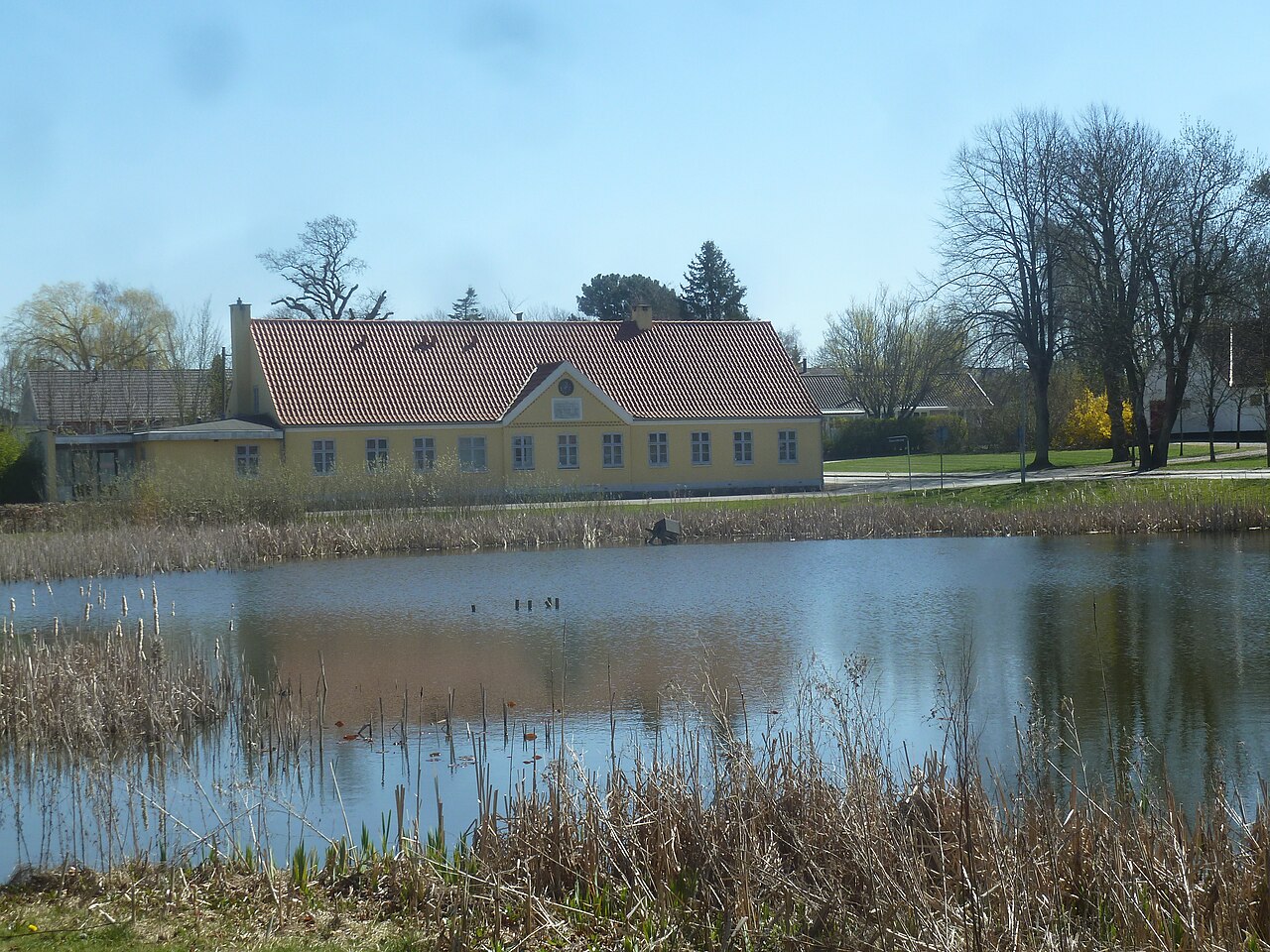
Smørumovre had a school as early as 1742. The surviving old school building was constructed in 1860, largely thanks to the estate owner Frederik Tutein of Edelgave, who financed the project.
Five years later, in 1865, Smørum acquired a poorhouse on Kirkevangen near the church. It contained ten rooms and six entrance halls.
Church, school, poorhouse, village pond, and farms were thus located within a relatively small area. Smørumovre was a community in which almost all the principal institutions were within walking distance.
The village’s star-shaped land redistribution: a historic landscape still visible today
In the late eighteenth century, agrarian reforms transformed land tenure and farming practices in Denmark.
Smørumovre underwent star-shaped enclosure (stjerneudskiftning), meaning that fields were divided into radial plots stretching outwards from the village.
Because not all the farms were moved out into their new fields, Smørumovre preserved an unusually large part of its original village structure. Several four-winged farmsteads still stand around the village pond, and roads, hedges, and field boundaries retain traces of the redistribution.
Egedal Municipality has accordingly identified Smørumovre as a cultural environment worthy of preservation.
The visitor can therefore experience not only a medieval church, but also much of the landscape and village pattern that evolved around it.

10. From farming parish to Copenhagen suburb
A final important link between Smørum and Copenhagen emerged during the twentieth century as the capital began to expand westwards.
During the Middle Ages, Copenhagen and Smørum had developed in different directions. Copenhagen became a trading town, a centre of power, and eventually a capital, while Smørum remained a community of farming villages.
After the Second World War, urban development began to bring the two areas closer together.
In 1965, the Copenhagen Urban Development Committee authorised extensive urban growth around Smørumnedre. The planning was linked to the Frederikssund railway, Måløv Station, and the so-called Frederikssund Finger in the capital region’s development plan.
The change was dramatic:
| Year | Population of Smørumnedre |
|---|---|
| 1965 | 249 |
| 1970 | 1,340 |
| 2007 | 9,102 |
Population development in Smørumnedre according to Trap Danmark.
While Smørumnedre grew into a modern suburb, Smørumovre retained much of its historic village character.
This contrast is precisely what makes the district so interesting. One part of Smørum was absorbed into the capital’s expanding urban area, while the other largely retained its village environment.
1934: when the village itself became responsible for the church
The transition from university ownership to independent ownership in 1934 was not entirely straightforward.
In 1932, the parochial church council expressed considerable opposition to taking over the building. The population was badly affected by the economic depression, and the council feared that maintaining the church would place an additional burden on local taxpayers.
Nevertheless, the church became self-owning in October 1934.
The episode illustrates how a church connected for nearly four centuries with a wealthy university in Copenhagen had to adjust to direct local administration and financing.
Subsequently, parish population growth created new needs for church facilities and burial space.
The churchyard was modernised with new facilities in 2007 and an apple orchard in a more recent section that came into use in 2018.
11. Smørum and Copenhagen: the historical parallels in dates
Scroll sideways to compare all three columns. You can also focus the table and use the left and right arrow keys.
| Period | Smørum and Smørum Church | Copenhagen and Zealand |
|---|---|---|
| c. 1400 BC | The Smørum Hoard and Maglehøj attest to Bronze Age society. | Zealand is shaped by Bronze Age farming, burial mounds, and rituals. |
| 10th-11th centuries | Traces of settlement in Smørumovre; large burial grounds east of the church. | The trading place Havn develops before Absalon’s time. |
| 1085 | Smørumnedre is mentioned in Canute the Holy’s deed of gift. | Royal power and ecclesiastical institutions become increasingly organised. |
| 1167-1170 | Smørum Church is traditionally dated to around 1170. | Absalon’s castle at Havn becomes a symbol of Copenhagen’s emergence. |
| 1300-1500 | Gothic vaults, a tower, extended chancel, and wall paintings. | Copenhagen becomes an important royal and ecclesiastical town. |
| 1479-1539 | The church is transferred to the University of Copenhagen in 1539. | The University is founded in 1479; the Reformation takes place in 1536. |
| 1657-1660 | Smørum suffers war, plundering, and agricultural crisis. | Copenhagen is besieged by Swedish forces. |
| 1803-1865 | Peasant revolt, school construction, and establishment of a poorhouse. | Denmark undergoes agrarian and social reform. |
| 1891-1934 | Major restoration; the church becomes self-owning. | Industrialisation and urban growth transform the capital region. |
| 1965-2007 | Smørumnedre changes from a village into a suburb. | Copenhagen expands along the planned urban fingers. |
| 2006-2020 | New wall paintings are uncovered; the building and furnishings are restored. | Medieval heritage becomes part of the modern metropolitan area. |
12. Overall historical assessment
The significance of Smørum Church lies in more than its age alone.
It represents an almost uninterrupted institutional history of approximately 850 years. The building, its furnishings, and its documentary record make it possible to follow changing periods in Denmark’s development.
Four aspects stand out in the overall interpretation.
First, the connection with the era of Copenhagen’s emergence is strong. Smørum Church was built in the same historical period in which Havn was developing into the fortified trading town that later became Copenhagen. This is a meaningful historical parallel, even though no direct connection between Absalon and the church’s construction has been documented.
Second, archaeological finds show that the Smørum area was important long before the Middle Ages. Burial grounds, settlement sites, and Bronze Age objects demonstrate that the church’s surroundings formed part of an ancient cultural landscape marked by human settlement, wealth, and ritual practices.
Third, the connection to the University of Copenhagen is exceptionally tangible. Nearly 400 years of university ownership, its coat of arms on the pulpit and bell, and the purpose of supporting poor students give Smørum Church a documented place in the educational history of the capital.
Fourth, the church’s development shows how a community can change without losing every trace of its origins. Smørumovre’s village structure and the Romanesque walls of the church survived, while Smørumnedre nearby developed into a Copenhagen suburb.
The history can be summed up in the following words:
Smørum Church was erected while Copenhagen was still a young medieval town. Over the following eight and a half centuries, Copenhagen grew from a trading settlement into a capital, while Smørum Church remained a gathering place for the farming community west of the city. Today the church stands as one of the visible links between the medieval village world of Zealand and the modern capital region.
Principal sources for further study
The most important sources for this investigation are the National Museum’s monumental series Danmarks Kirker (Churches of Denmark), with its detailed account of the architecture, furnishings, and restorations; the article Smørum Kirke in Lex, written by National Museum specialists; the church’s own historical summary; Trap Danmark on prehistoric Egedal; and the Ledøje-Smørum Historical Association, which holds extensive local historical material.
For the particular stories concerning the fighting with Swedish troops, the peasant revolt, and the development of the village, local historical scholarship is especially valuable. It remains important to read primary documents and local legends with different degrees of confidence.
In my overall assessment, there is enough material for a fully illustrated local-history publication on Smørum Church and its surroundings. The strongest narratives would be the link with Absalon’s Copenhagen, the traces of the Viking Age, university ownership, the Swedish Wars, the hidden silver treasure, and the dramatic rediscovery of the wall paintings.
Sources and further reading
- National Museum of Denmark: Danmarks Kirker — Smørum, architectural description and related material (PDF).
- National Museum of Denmark: Danmarks Kirker — Smørum, furnishings and historical sources (PDF).
- Smørum Church in Lex, the Danish national encyclopaedia.
- Wall paintings in Smørum Church — Trap Danmark in Lex.
- Smørum Church — Ledøje-Smørum Parish.
- Prehistory in Egedal Municipality — Trap Danmark.
- The history of Smørumnedre — Trap Danmark.
- The fighting with Swedish troops in Smørum — Ledøje-Smørum Historical Association.
- Smørumovre — Egedal Municipality’s planning and cultural heritage description.
- Smørumnedre — Egedal Municipality’s planning and cultural heritage description.
- Ledøje-Smørum Historical Association — local archive and articles.
- Newly discovered wall paintings in Smørum Church — scholarly article (PDF).
Photographic references
The five historical photographs are reproduced above, with the photographer, original image page and licence credited in each caption.
- Smørum Church and its churchyard, with the modern northern extension.
- A detail of the medieval wall paintings inside Smørum Church.
- The nave viewed from the altar, with painted vaults above the pews.
- The old school in Smørumovre, part of the historic village community.
- The church seen from the north in 2006, before the northern porch was extended.
